Living in Lincoln, CA: What the Tax Bill Tells You First
Living in Lincoln, CA means buying into a city that added more than 45,000 people in twenty-five years and paid for the infrastructure with special taxes that vary enormously from one subdivision to the next. Two Lincoln homes at the same price, three miles apart, can carry annual tax obligations that differ by more than $2,400, and nothing on the listing tells you which one you're looking at. This guide walks through Lincoln's neighborhoods, what each one actually costs to own, the commute, the school data, and the five numbers worth checking before you write an offer.
If you're looking at Lincoln right now, you've probably already noticed that the homes look newer and cost less than Roseville or Rocklin, and that nobody quite explains where the difference goes.
The short version
- Lincoln's population was 56,494 as of January 1, 2026, per the California Department of Finance E-1 estimates released May 2026. In 2000 it was 11,205.
- Most of Lincoln was built after 2000, and most of that construction was financed by Community Facilities Districts and assessment districts that appear on your property tax bill as separate line items, not as part of the 1 percent.
- The spread between Lincoln districts is large. Lincoln Crossing homeowners paid $1,150 to $3,577 per year in CFD 2003-1 alone in FY 2024/25. Twelve Bridges' assessment district averaged roughly $185 per parcel for FY 2025/26.
- Sun City Lincoln Hills is 6,783 homes, the single largest block of housing in the city. Its HOA assessment is $188 per month as of January 2026.
- Lincoln is served by Western Placer Unified School District, rated B+ by Niche as of September 2026. Its two comprehensive high schools do not rate identically.
Lincoln Is Less Than Half the City Its Own General Plan Describes
Lincoln is not finished. That's the first thing to understand.
The City of Lincoln's General Plan 2050, adopted by the City Council on March 25, 2008, is direct about where this is headed:
"From an economic development standpoint, the City's vision for the future is to become a self-sustaining community. Based on studies prepared for the General Plan, a target population to support this vision was in the 120,000 population range."
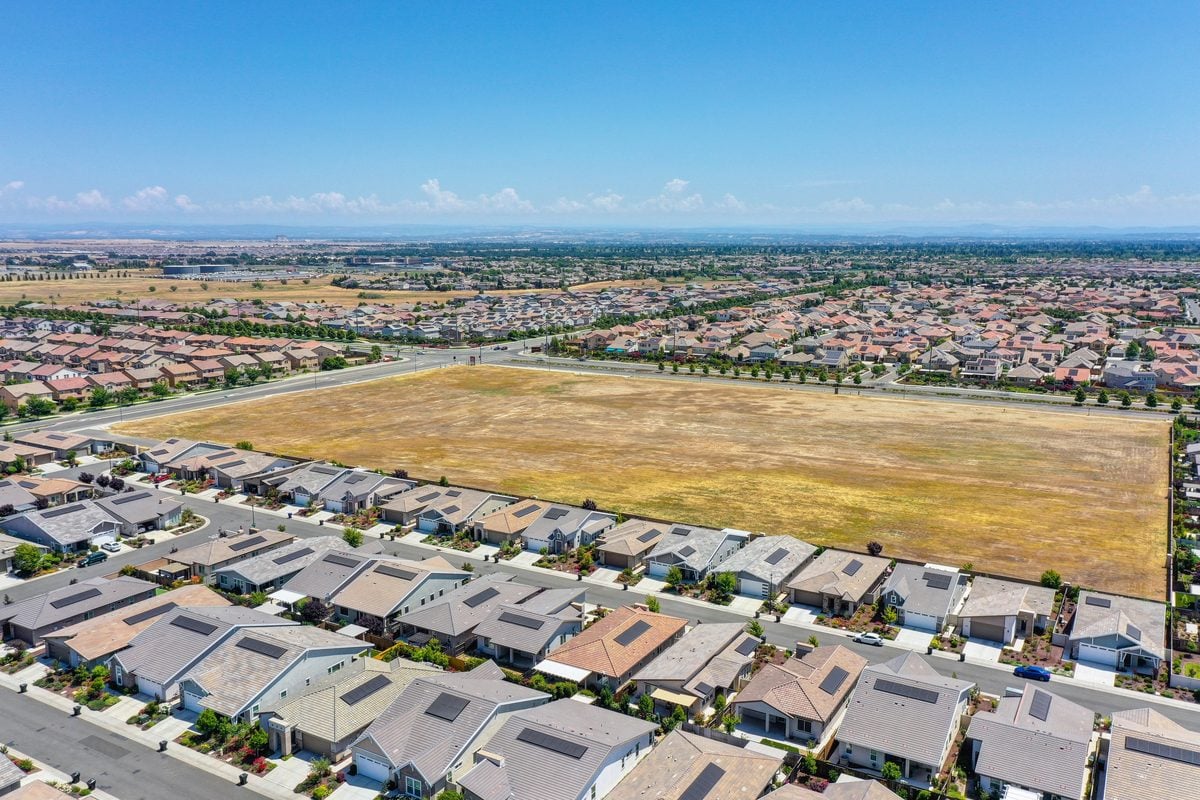
Against a January 2026 population of 56,494, that's a city planning for roughly twice its current size. The General Plan designates seven Villages as the primary growth areas, and for each of them the plan states that "all urban development under this designation shall be approved pursuant to an adopted specific plan." Village 5 alone, on Lincoln's southwestern edge, covers 4,787 acres and is planned for approximately 8,200 dwelling units. Village 1, on the eastern side near Sierra College Boulevard, is planned for 5,641.
Those numbers are from the adopted specific plans and the project EIRs, not from a forecast somebody published. They're the city's own commitments on paper.
The growth already happened once, fast. Lincoln went from 11,205 residents in the 2000 Census to 42,819 in 2010, an increase of 282 percent. The City's own Housing Element, filed with the California Department of Housing and Community Development, describes that decade plainly: Lincoln's growth "was faster than any other place in the United States" and made it one of only four places in the country to more than triple in population between 2000 and 2010.
I've watched Lincoln change from a town most people drove through on the way to Marysville into a city of more than 56,000. That's not nostalgia, it's the reason the tax structure looks the way it does.
A city that builds itself in twenty years has to borrow to do it, and the borrowing shows up on your tax bill.
The Tax Bill Separates Lincoln Neighborhoods More Than the Listing Does
This is the part almost nobody explains, and it's the single most useful thing on this page.
Placer County's own Property Tax Overview describes the mechanism. The Auditor-Controller applies the 1 percent rate and voter-approved bond rates to assessed value, and then, in the County's words, "direct charges are then added to the parcels to obtain the total tax due." Those direct charges are where Mello-Roos special taxes and assessment districts live. They're not part of the 1 percent, they don't show up in most online payment estimators, and they vary by parcel.
Lincoln has a lot of them. Here's what the City published for fiscal year 2025/26, taken from the annual reports the City files for each district:
District | FY 2025/26 total levy | Parcels | Average per parcel |
|---|---|---|---|
Lincoln Crossing CFD No. 2003-1 | $6,771,328.74 | 2,751 | about $2,461 |
Lakeside CFD No. 2006-1, Improvement Area 1 | $390,716.74 | 149 | about $2,622 |
Independence at Lincoln District No. 2019-1 | $1,435,902.06 | 591 | about $2,430 |
Lakeside CFD No. 2006-1, Improvement Area 2 | $537,318.42 | 256 | about $2,099 |
Foskett Ranch Reassessment District No. 2017-1 | $256,159.08 | 237 | about $1,081 |
Twelve Bridges Assessment District No. 1995-1 | $1,139,246.72 | 6,151 | about $185 |
Source: City of Lincoln annual reports for fiscal year 2025-26. The levy totals and parcel counts are published by the City. The per-parcel averages in the right column are my arithmetic on those published totals, not a published rate, and actual charges vary by home size and zone within each district. I'm showing them because the order of magnitude is the point.
Look at the top and the bottom of that column. A Lakeside Improvement Area 1 parcel carries roughly $2,622 a year. A Twelve Bridges parcel carries roughly $185. That's a difference of about $2,437 a year, or around $203 a month. At a 6.5 percent interest rate on a 30-year loan, $203 a month services roughly $32,000 of mortgage. Two buyers with identical budgets, looking at identical-looking Lincoln homes, are not shopping in the same price range.
One more distinction worth knowing, because agents get it wrong constantly: Twelve Bridges Assessment District No. 1995-1 is a 1915 Act assessment district, not a Mello-Roos CFD. Different law, different structure, and in this case a much smaller number. People say "Mello-Roos" about both.
In Lincoln Crossing, the special tax is set by square footage, not by price
Lincoln Crossing's CFD No. 2003-1 was formed May 13, 2003. The City's own annual report states the purpose in one sentence:
"The purpose of the Special Tax is to fund public infrastructure improvements within the District and pay debt service and associated administration costs."
What makes it worth studying is how it's calculated. The rate is tiered by the square footage of the house, not by what the house is worth:
Building square footage | FY 2024/25 applied rate |
|---|---|
Under 1,400 | $1,150.46 |
1,400 to 1,800 | $1,537.74 |
1,801 to 2,200 | $1,981.98 |
2,201 to 2,600 | $2,232.58 |
2,601 to 3,000 | $2,904.64 |
Over 3,000 | $3,576.70 |
Source: City of Lincoln, Fiscal Year 2024/25 Annual Report for Community Facilities District No. 2003-1 (Lincoln Crossing Project).
So the 3,100 square foot house pays roughly $2,426 a year more than the 1,300 square foot house down the street, permanently, regardless of what either one sells for. Buying 400 more square feet in Lincoln Crossing can move you into the next tax tier. That's a real cost of the upgrade and it belongs in the math before you fall in love with the floor plan.
The Series 2018 refunding bonds for that district mature September 1, 2034. That date matters if you're planning to hold the house, and I've never once seen it in a listing.
I pull the actual CFD annual report for the specific district before my buyers write an offer in Lincoln. Not the online tax estimate, the district's own report.
Check the parcel, not the city.
The five numbers to check before you write an offer in Lincoln (save this)
- The full prior-year tax bill for the specific parcel, including every direct charge, at the Placer County Treasurer-Tax Collector lookup: common3.mptsweb.com/mbc/placer/tax/search. You'll need the parcel number or the street address.
- Which district or districts the parcel sits in, and whether any of them are bond districts with a maturity date.
- The HOA dues, and what they actually fund. Lincoln HOAs range from none at all to several hundred dollars a month.
- The home's square footage against the CFD tier table, if it's in Lincoln Crossing or another size-tiered district.
- The school attendance boundary for that exact address, confirmed through the district's own lookup, not the listing.
Number one is the one people skip, and it's the one that costs money. If you want, send me an address and I'll run the Placer Parcel Check on it: the actual tax bill, the CFD and special assessment detail, and the HOA documents, pulled and explained, before you write anything.
The Neighborhoods, Compared on What You Can Measure
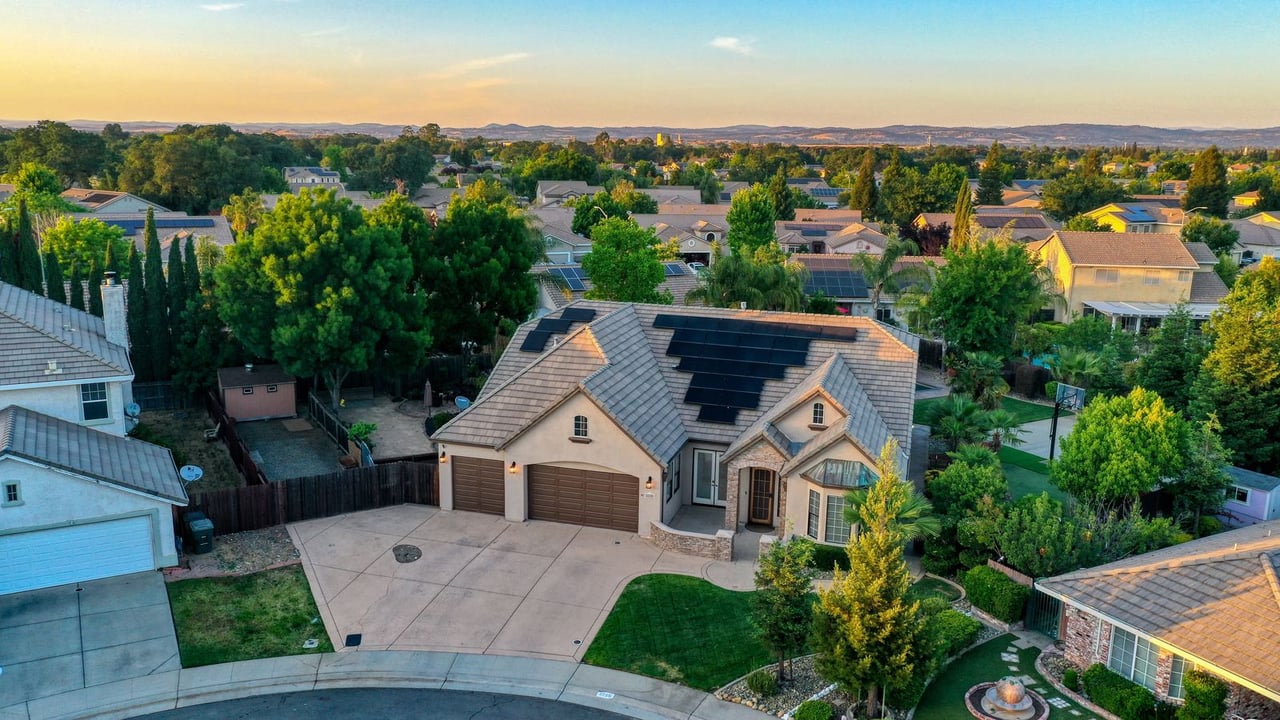
Lincoln is organized into distinct master-planned areas plus a small historic core. They differ on build era, lot size, HOA structure and special tax exposure, and those four things explain most of the price differences.
Area | Typical build era | HOA | Special tax exposure |
|---|---|---|---|
Downtown / old Lincoln | 1920s to 1950s bungalows, plus scattered later infill | Generally none | Predates the City's bond districts |
Lincoln Crossing | Mid-2000s | Yes, and it bundles access to The Club at Lincoln Crossing | CFD 2003-1, tiered by square footage, bonds mature 2034 |
Twelve Bridges | Early 2000s on the west side, 2020 onward on the east side, still building | Varies by subdivision, some have none | Assessment District 1995-1, comparatively small per parcel |
Foskett Ranch | Early 2000s | Detached homes generally none, townhomes yes | Reassessment District 2017-1, 237 parcels only |
Independence at Lincoln | 2019 to present, active construction | Yes | CFD 2019-1 |
Lakeside | Post-2006 | Yes | CFD 2006-1, two improvement areas |
Sun City Lincoln Hills | 1999 to 2008 | Yes, age-restricted 55+ | See below |
Catta Verdera / Verdera | Custom and semi-custom, gated | Yes | Varies by phase, verify parcel by parcel |
Two honest notes on this table. First, the downtown line is inference: the historic core predates every bond district the City lists, and none of the district reports name a downtown area. That's a strong conclusion but it isn't a document, so confirm the parcel. Second, Catta Verdera's HOA doesn't publish its dues publicly, and no Catta Verdera district appears in the City's FY 2025-26 district list, which means the answer there is parcel-specific rather than community-wide.
Catta Verdera itself is the top of the Lincoln market. Verdera's HOA describes the community as roughly 900 acres with 614 home sites, gated with an on-duty gate attendant, wrapped around Catta Verdera Country Club. As of September 11, 2026, eleven properties were listed there at a median list price of about $2,070,000. Country club membership is separate from the HOA.
In Lincoln, the era the house was built tells you more about the cost of owning it than the square footage does.
Sun City Lincoln Hills Is the Single Largest Block of Housing in Lincoln
At 6,783 homes, Sun City Lincoln Hills is bigger than most cities in Placer County.
It's an age-restricted community. The association describes itself as an active adult community for adults 55 or older, which is a lawful age restriction under federal housing law and a fact of the HOA's governing documents. Homes were built between 1999 and 2008 by Del Webb, and they range from attached units under 1,000 square feet to single-family homes over 3,000.
The assessment is published by the association itself: $188 per month, billed quarterly at $564, effective January 2026. The association's financial summary shows homeowner assessments contributing roughly $12.0 million toward a $20.1 million annual operating budget, with non-dues revenue covering the rest, plus $2.7 million in assessments toward reserves. The community includes two lodges, two fitness centers, a day spa, dining, two 18-hole golf courses, twenty-seven miles of trails, pickleball, tennis and bocce courts, and more than seventy clubs.
One caution. The Villas at Sun City Lincoln Hills carry a separate and substantially higher monthly fee, and whether golf access is funded by the base assessment or is pay-to-play is not something the association states plainly on its public pages. If golf is part of why you're looking there, get that answer in writing during your HOA document review.
On the market side, Redfin reported a median sale price of $671,676 in Sun City Lincoln Hills over the three months ending August 2026, down 3.3 percent year over year, at $368 per square foot with a median 18 days on market.
Sun City is large enough that its own numbers move the citywide Lincoln median, which is a good reason not to use the citywide median for anything.
Highway 65 Is the Commute, and It Is Also the Constraint
Lincoln has one main road south, and its capacity is the whole conversation.
The Lincoln Bypass opened October 8, 2012. It runs 11.7 miles, starting at Industrial Boulevard, routing Highway 65 around the city and reconnecting near Sheridan. It cost $325 million and it took roughly twenty-two years from the start of environmental review to opening. Before it existed, through traffic ran down Lincoln Boulevard.
What it didn't fix is the segment south of Lincoln. The Placer County Transportation Planning Agency's Highway 65 widening project would add a third southbound lane between Blue Oaks Boulevard and Galleria Boulevard plus auxiliary lanes running north to Lincoln Boulevard, at a total project cost of $115 million. Environmental certification was completed in March 2018 and final design in 2020, and PCTPA's project page still states that "there is currently insufficient secured funding to provide a firm construction timeframe." A federal BUILD grant of nearly $22.5 million was announced in July 2025 for the Phase 1 segment, with news coverage at the time citing a construction start in early 2027 and completion in late 2028. PCTPA's own page had not been updated to reflect that when I checked it in September 2026, so treat the 2027 start as reported rather than confirmed.
Separately, Placer County awarded a $61.6 million construction contract for Placer Parkway Phase 1 in April 2026, connecting Highway 65 at the Whitney Ranch Parkway interchange to North Foothills Boulevard. That's south of Lincoln. The benefit to a Lincoln commuter is indirect, by taking pressure off Highway 65, not by shortening the drive.
Now the part that requires honesty. The commonly quoted drive times from Lincoln are roughly 10 miles and 14 minutes to downtown Roseville, about 9.4 miles to the Galleria, and about 29 miles and 32 minutes to downtown Sacramento. Those are free-flow numbers from distance calculators, not rush-hour numbers. Southbound Highway 65 toward I-80 is the known morning bottleneck in south Placer, which is the entire reason a $115 million widening project exists. I have never found a credible published peak-hour figure for this corridor, and I'm not going to invent one.
So drive it. Leave from the specific neighborhood you're considering, at the hour you'd actually leave, on a Tuesday or Wednesday. The difference between a Twelve Bridges on-ramp and a downtown Lincoln start can be meaningful, and it's free to find out.
A commute you haven't driven at the real hour is a guess, and it's the guess people regret.
Lincoln's Two High Schools Don't Rate the Same
Lincoln is served by Western Placer Unified School District, which is headquartered in Lincoln and also operates Sheridan Elementary outside the city limits.
Here's the sourced picture as of September 11, 2026:
- Niche grades the district B+ overall, ranking it #7 in Best School Districts in the Sacramento Area and #160 of 466 districts statewide.
- Spring 2025 CAASPP results for the district: 56.45 percent met or exceeded the state standard in English Language Arts, 45.72 percent in mathematics.
- GreatSchools publishes no numeric district-level rating for Western Placer Unified. It does rate the individual schools: Lincoln High School 7 out of 10 and Twelve Bridges High School 8 out of 10.
That last line is the one worth pausing on. Two comprehensive high schools in the same district, one rated 7 and one rated 8, and which one a given address feeds into depends on the attendance boundary rather than on the city line or the neighborhood name. District boundaries also extend past the Lincoln city limits, so a Lincoln mailing address is not by itself proof of anything.
Confirm the attendance boundary for the specific address through the district's own address lookup before you assume. Not the listing, not the aggregator, the district.
School ratings are a fact about a school, and the boundary is a fact about a parcel. Don't treat either one as a fact about a city.
What This Changes If You're Buying, and What It Changes If You're Selling
If you're buying
Build your budget around the total monthly obligation, not the list price. Principal, interest, the 1 percent base tax, every direct charge on the parcel, HOA dues, and insurance. Two Lincoln homes listed within $10,000 of each other can land $250 a month apart once the direct charges are in, and the cheaper listing is sometimes the more expensive house.
One note on insurance, since Lincoln adopted an updated Fire Hazard Severity Zone map in 2025. The City's own CAL FIRE FAQ makes a point that saves a lot of confusion:
"Insurance companies use different risk models than CAL FIRE's hazard model and likely do not specifically reference FHSZ designations, though similar data may overlap."
In other words, the hazard map and your insurance quote are two different things. Get an actual quote on the actual address during your contingency period rather than reasoning from a map color.
If you're selling
Know your own direct charges before you price. If your parcel carries a heavier CFD than the comparable sale down the road, a buyer running real payment math will find it, and they'll find it after you're in contract if you haven't addressed it first. Sellers who put the tax detail in front of buyers early tend to hold their number better than sellers who let it surface during the loan process.
Three mistakes I see repeatedly in Lincoln
- Treating "Lincoln" as one market. It's a historic core, seven planned Villages at different stages, an age-restricted community of 6,783 homes, and a gated custom-home enclave. The citywide median describes none of them well.
- Reading a listing's tax estimate as the tax bill. Most online estimators apply a percentage to the price. That's the 1 percent. It isn't the direct charges.
- Assuming newer means cheaper to own. In Lincoln the newest neighborhoods are frequently the ones carrying active bond districts, because that's how they got built.
How I'd Decide
The people who do well in Lincoln are the ones who priced the total monthly obligation before they picked a neighborhood, instead of the other way around.
Do that, and you'll know the parcel's actual direct charges, the HOA dues and what they fund, and which high school boundary the address sits in, all before you write an offer instead of during escrow.
Lincoln rewards the buyer who reads the tax bill.
If you want a hand with that part, I'll run the Placer Parcel Check on a specific Lincoln address: the actual prior-year tax bill with every direct charge itemized, the CFD or assessment district detail with its maturity date, and the HOA documents, pulled from the county and the districts and explained in plain language. No obligation, and no pressure to list or buy anything. Send me the address and let's connect.
You can read what past clients have said on Google and on Zillow.
Common Questions About Living in Lincoln, CA
Does every home in Lincoln, CA have Mello-Roos?
No. Mello-Roos and assessment districts in Lincoln are parcel-specific. The historic downtown core predates the City's bond districts entirely, while newer master-planned areas like Lincoln Crossing, Lakeside and Independence sit inside active districts. Always pull the specific parcel's tax bill rather than assuming based on the city or the neighborhood name.
How much are Mello-Roos taxes in Lincoln, CA?
It depends entirely on the district. In fiscal year 2024/25, Lincoln Crossing's CFD No. 2003-1 applied rates ranged from $1,150.46 to $3,576.70 per year depending on the home's square footage. Twelve Bridges Assessment District No. 1995-1 averaged roughly $185 per parcel for fiscal year 2025/26 based on the City's published levy and parcel count.
What school district serves Lincoln, CA?
Western Placer Unified School District serves Lincoln. Niche graded the district B+ as of September 2026, ranking it #7 in the Sacramento area. The district's two comprehensive high schools, Lincoln High and Twelve Bridges High, are rated 7 and 8 out of 10 respectively by GreatSchools, so the attendance boundary for a specific address matters.
How far is Lincoln, CA from Sacramento?
Lincoln is about 29 miles from downtown Sacramento by way of Highway 65, commonly quoted at around 32 minutes in free-flow conditions, and roughly 10 miles from downtown Roseville. Those figures are not peak-hour times. Southbound Highway 65 is the region's known morning bottleneck, so drive the route at your actual commute hour.
Is Sun City Lincoln Hills only for people 55 and older?
Sun City Lincoln Hills is an age-restricted active adult community for adults 55 or older under its governing documents, which is a lawful age restriction under federal housing law. It contains 6,783 homes built between 1999 and 2008, with a monthly HOA assessment of $188 as of January 2026.
Related Local Topics
If Lincoln's special tax structure is the part you want to understand better, start with my breakdown of how Mello-Roos works across Placer County, which covers the mechanics that apply in Rocklin and Roseville too. If you're comparing Lincoln against a market with acreage and almost no special tax exposure, the Loomis neighborhood guide is the other end of the Placer County spectrum. And if you're ready to look at what's actually available, here are the current Lincoln, CA homes for sale.
Sources
- California Department of Finance, E-1 City and County Population Estimates, January 1, 2026, released May 2026. Population and housing unit counts.
- City of Lincoln, General Plan 2050, adopted March 25, 2008. Target population, Village designations, specific plan requirement.
- City of Lincoln, 2021-2029 Housing Element, filed with California Department of Housing and Community Development. Population growth 2000 to 2010.
- City of Lincoln, Fiscal Year 2024/25 Annual Report for Community Facilities District No. 2003-1 (Lincoln Crossing Project). Formation date, purpose, rate tiers, bond maturity.
- City of Lincoln, annual district reports for fiscal year 2025-26. Levy totals and parcel counts for all districts listed.
- City of Lincoln, Village 5 Specific Plan and Village 1 Specific Plan EIR. Planned unit counts and acreage.
- City of Lincoln and CAL FIRE, 2025 Fire Hazard Severity Zone FAQ, March 2025. Insurance and hazard model language.
- Placer County, Property Tax Overview. Direct charges and the 1 percent base rate.
- Placer County Treasurer-Tax Collector parcel tax lookup, accessed September 2026.
- Sun City Lincoln Hills Community Association, Homeowner Fees and Financials, assessment effective January 2026.
- Verdera Homeowners Association, community description.
- Redfin, Lincoln and Sun City Lincoln Hills housing market data, three months ending June 2026 and August 2026 respectively, accessed September 11, 2026.
- Niche, Western Placer Unified School District, accessed September 11, 2026.
- GreatSchools, Lincoln High School and Twelve Bridges High School ratings, accessed September 11, 2026.
- California Department of Education CAASPP results, Spring 2025, via EdSource.
- Placer County Transportation Planning Agency, Highway 65 Widening project page, accessed September 2026.
- Placer County, Placer Parkway Phase 1 construction contract award, April 7, 2026.
A note on method: when I checked in September 2026, Redfin's Lincoln market page was reporting one month behind its Roseville and Rocklin pages. That's why this guide doesn't include a cross-city median comparison table. Comparing two markets on figures measured in different months produces a number that looks precise and isn't.
About the Author
Parris Krygsman is a real estate agent with Coldwell Banker Realty serving Placer County, California, including Rocklin, Roseville, Loomis, Granite Bay, Lincoln, Auburn, Penryn, and Sacramento. Licensed since 1991, he has over 35 years of experience and more than $700 million in closed sales, and ranks in the top 3% of Coldwell Banker agents in the Sac-Tahoe Region. His listings sell at 98 to 100 percent of list price. He works with buyers and sellers across Placer County's master-planned communities, established neighborhoods, acreage properties and luxury markets, and is frequently asked to help clients understand special tax districts, HOA structures and cost of ownership before they commit to a purchase or a list price.
Coldwell Banker Realty · Lincoln and Placer County, CA · 530-798-3400 · CalDRE#01122830
Disclaimer
This article is provided for general information only and is not legal, tax, financial or appraisal advice. Market figures, ratings, tax rates and project timelines are accurate as of the sources and dates cited and are subject to change. Special tax and assessment obligations are parcel-specific and must be verified for any individual property. School attendance boundaries must be confirmed with the district for a specific address. Nothing here substitutes for an appraisal, a comparative market analysis, or independent professional advice.
Equal Housing Opportunity. Parris Krygsman, CalDRE#01122830 | NRT West, INC, CalDRE#01908304, regulated by the California Department of Real Estate.